

Hey there! As a supplier of common titanium standard parts, I often get asked whether these parts are suitable for high - temperature environments. Well, let's dig into this topic and find out.
First off, titanium is a pretty amazing metal. It's known for its high strength - to - weight ratio, excellent corrosion resistance, and biocompatibility. But when it comes to high - temperature performance, things get a bit more complicated.
Common titanium standard parts are usually made from commercially pure titanium or titanium alloys. Commercially pure titanium has good formability and corrosion resistance, but its high - temperature strength isn't all that great. At temperatures above 300°C (about 572°F), its strength starts to decline significantly. This is because at elevated temperatures, the atomic structure of titanium becomes more active, and the material starts to lose its ability to withstand stress.
On the other hand, titanium alloys are a different story. Alloying elements like aluminum, vanadium, and molybdenum can be added to titanium to improve its high - temperature properties. For example, the well - known Ti - 6Al - 4V alloy (Grade 5 titanium) has much better high - temperature strength compared to commercially pure titanium. It can maintain its mechanical properties at temperatures up to around 400 - 500°C (752 - 932°F).
So, if you're in a high - temperature environment where the temperature doesn't exceed these limits, common titanium standard parts made from suitable alloys can be a great choice. They offer a good balance between weight, strength, and corrosion resistance.
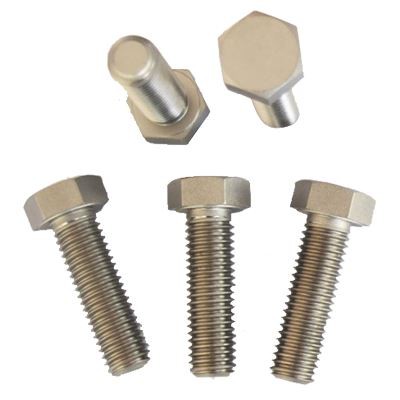
Let's take a look at some of our products and how they might perform in high - temperature settings. We have Titanium Alloy Hexagon Full Thread Bolts. These bolts are made from high - quality titanium alloys. In moderately high - temperature environments, they can hold up well. The alloy composition helps them maintain their shape and integrity, preventing them from deforming under stress.
Another product is the M8 Heightened Flange Surface Nuts. These nuts are designed to work in tandem with our bolts. In high - temperature situations, the right alloy used in their manufacturing ensures that they don't loosen or lose their grip. This is crucial for applications where a secure connection is essential.
Then there's the GR5 Titanium Fancy Gear Oil Filler Cap. Made from Grade 5 titanium, this cap can withstand relatively high temperatures. It won't crack or warp, which is important for keeping the oil in the gearbox and preventing contaminants from getting in.
However, it's important to note that even with titanium alloys, there are limits. At extremely high temperatures, say above 600°C (1112°F), titanium starts to react with oxygen in the air. This forms a layer of titanium oxide on the surface, which can lead to oxidation and a decrease in the material's mechanical properties over time.
So, when considering using common titanium standard parts in high - temperature environments, you need to think about a few things. First, what's the maximum temperature the parts will be exposed to? Second, how long will they be at that temperature? Third, what kind of mechanical loads will they be under?
If the temperature is within the acceptable range for the specific titanium alloy, and the mechanical loads are reasonable, then common titanium standard parts can be a great option. They're lighter than many other metals, which can be a huge advantage in applications where weight is a concern, like aerospace and automotive industries.

In addition to the temperature and load factors, the environment also plays a role. If there are other chemicals or gases present, they might react with the titanium parts. For example, some halogen - containing gases can cause corrosion of titanium at high temperatures. So, it's essential to assess the entire operating environment.
To sum it up, common titanium standard parts can be suitable for high - temperature environments, but it depends on a lot of factors. You need to choose the right alloy, consider the temperature and load conditions, and evaluate the overall environment.
If you're in the market for common titanium standard parts for high - temperature applications, we're here to help. We have a wide range of products, and our team of experts can assist you in selecting the right parts for your specific needs. Whether you're working on a small project or a large - scale industrial application, we've got you covered.
Don't hesitate to reach out to us for more information or to start a procurement discussion. We're eager to work with you and provide the best titanium standard parts for your high - temperature requirements.
References
- "Titanium and Titanium Alloys: Fundamentals and Applications" by Yuri Estrin, Mark A. Meyers, and David J. Lloyd
- "Materials Science and Engineering: An Introduction" by William D. Callister Jr. and David G. Rethwisch
