

As a supplier of GR1 titanium alloy bolts, I am often asked about the corrosion resistance of these remarkable fasteners. In this blog post, I will delve into the science behind the corrosion resistance of GR1 titanium alloy bolts, exploring their properties, applications, and the factors that contribute to their ability to withstand harsh environments.
Understanding GR1 Titanium Alloy
GR1 titanium alloy, also known as commercially pure titanium, is one of the most widely used titanium alloys due to its excellent combination of properties. It is composed of at least 99% titanium, with small amounts of iron, oxygen, carbon, nitrogen, and hydrogen. This composition gives GR1 titanium alloy its unique combination of strength, ductility, and corrosion resistance.
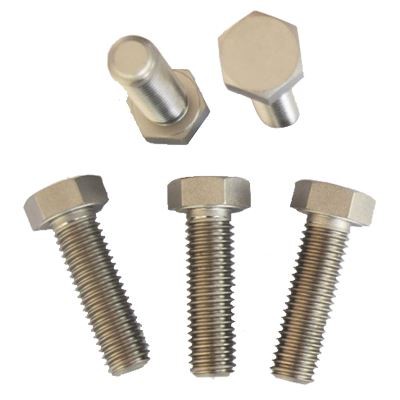

One of the key features of GR1 titanium alloy is its ability to form a passive oxide layer on its surface when exposed to oxygen. This oxide layer is extremely thin, typically only a few nanometers thick, but it is highly protective and acts as a barrier between the metal and the surrounding environment. The passive oxide layer is self - healing, meaning that if it is damaged, it will reform quickly in the presence of oxygen, providing continuous protection against corrosion.
Corrosion Resistance Mechanisms
The corrosion resistance of GR1 titanium alloy bolts can be attributed to several mechanisms:
Passive Oxide Layer
As mentioned earlier, the passive oxide layer is the primary defense against corrosion. This layer is composed mainly of titanium dioxide (TiO₂), which is highly stable and resistant to most chemical attacks. The oxide layer forms spontaneously in air or in the presence of water and oxygen, and it adheres strongly to the metal surface. It prevents the metal from reacting with corrosive agents such as acids, alkalis, and salts, effectively protecting the bolt from corrosion.
Chemical Inertness
GR1 titanium alloy is chemically inert in many environments. It has a low reactivity with most substances, which means that it is less likely to undergo chemical reactions that can lead to corrosion. For example, it is resistant to attack by organic acids, chlorides, and sulfates, which are common corrosive agents in industrial and marine environments.
Immunity to Stress - Corrosion Cracking
Stress - corrosion cracking (SCC) is a type of corrosion that occurs when a metal is under tensile stress in a corrosive environment. GR1 titanium alloy is highly resistant to SCC, making it suitable for applications where the bolts are subjected to high stress and corrosive conditions. This resistance is due to its stable passive oxide layer and its low susceptibility to hydrogen embrittlement.
Applications in Corrosive Environments
The excellent corrosion resistance of GR1 titanium alloy bolts makes them ideal for a wide range of applications in corrosive environments. Some of the common applications include:
Marine Industry
In the marine industry, GR1 titanium alloy bolts are used in shipbuilding, offshore platforms, and marine equipment. The high salt content in seawater is extremely corrosive to most metals, but GR1 titanium alloy bolts can withstand the harsh marine environment without significant corrosion. They are used in critical components such as hull structures, deck fittings, and engine mounts, where corrosion resistance is essential for the safety and reliability of the equipment.
Chemical Processing Industry
In the chemical processing industry, GR1 titanium alloy bolts are used in reactors, storage tanks, and piping systems. These environments often contain highly corrosive chemicals such as acids, alkalis, and solvents. GR1 titanium alloy bolts can resist the corrosion caused by these chemicals, ensuring the integrity of the equipment and preventing leaks and failures.
Aerospace Industry
In the aerospace industry, GR1 titanium alloy bolts are used in aircraft structures, engines, and landing gear. The aerospace environment is exposed to a variety of corrosive agents, including moisture, salt spray, and chemicals. GR1 titanium alloy bolts provide the necessary corrosion resistance to ensure the long - term performance and safety of the aircraft.
Factors Affecting Corrosion Resistance
While GR1 titanium alloy bolts have excellent corrosion resistance, there are several factors that can affect their performance in corrosive environments:
Temperature
High temperatures can accelerate the corrosion rate of GR1 titanium alloy bolts. At elevated temperatures, the passive oxide layer may become less stable, and the metal may react more readily with corrosive agents. However, GR1 titanium alloy can still maintain good corrosion resistance at moderate temperatures, typically up to 300°C.
pH of the Environment
The pH of the environment can also affect the corrosion resistance of GR1 titanium alloy bolts. In general, GR1 titanium alloy is more resistant to corrosion in neutral and slightly acidic environments. In highly acidic or alkaline environments, the passive oxide layer may be damaged, leading to increased corrosion.
Presence of Halides
Halides such as chlorides and fluorides can have a significant impact on the corrosion resistance of GR1 titanium alloy bolts. Chlorides, in particular, can cause pitting corrosion, which is a localized form of corrosion that can lead to the formation of small holes in the metal surface. However, GR1 titanium alloy has a relatively high resistance to pitting corrosion compared to other metals.
Comparing with Other Materials
When compared to other materials commonly used for bolts, such as steel and stainless steel, GR1 titanium alloy bolts offer superior corrosion resistance.
Steel Bolts
Steel bolts are prone to rusting in the presence of moisture and oxygen. Rust is a form of corrosion that can weaken the bolts and reduce their strength. In contrast, GR1 titanium alloy bolts do not rust and can maintain their mechanical properties in corrosive environments.
Stainless Steel Bolts
Stainless steel bolts are more corrosion - resistant than steel bolts, but they can still be susceptible to corrosion in certain environments, especially in the presence of chlorides. GR1 titanium alloy bolts have a higher resistance to chloride - induced corrosion, making them a better choice for applications in marine and industrial environments.
Our Product Range
As a supplier of GR1 titanium alloy bolts, we offer a wide range of products to meet the diverse needs of our customers. Our product range includes Titanium Alloy Hexagon Full Thread Bolts, which are suitable for general fastening applications, and Titanium Alloy Hexagonal Nuts, which are designed to work in conjunction with our bolts. We also offer Flange Head Cap Bolts Titanium GR5 M8 X 45, which are ideal for applications where a high clamping force is required.
Conclusion
In conclusion, GR1 titanium alloy bolts are highly corrosion - resistant due to their unique combination of properties, including the formation of a passive oxide layer, chemical inertness, and immunity to stress - corrosion cracking. They are suitable for a wide range of applications in corrosive environments, such as the marine, chemical processing, and aerospace industries. While there are factors that can affect their corrosion resistance, such as temperature, pH, and the presence of halides, GR1 titanium alloy bolts generally offer superior performance compared to other materials.
If you are looking for high - quality, corrosion - resistant bolts for your project, we invite you to contact us for more information and to discuss your specific requirements. Our team of experts is ready to assist you in selecting the right products and providing you with the best solutions.
References
- "Titanium: A Technical Guide" by John C. Williams
- "Corrosion Science and Engineering" by David A. Jones
- "Handbook of Corrosion Data" edited by Bruce D. Craig
