

Hey there! As a supplier of GR1 titanium alloy bolts, I often get asked whether these bolts are easy to machine. Well, let's dive right into it and explore the ins and outs of machining GR1 titanium alloy bolts.
First off, let's talk a bit about what GR1 titanium alloy is. GR1 titanium is a commercially pure titanium grade. It's known for its excellent corrosion resistance, good ductility, and relatively low density. These properties make it a popular choice in various industries, including aerospace, automotive, and marine. But when it comes to machining, things aren't always as straightforward as we'd like.
One of the main challenges when machining GR1 titanium alloy bolts is its high chemical reactivity at elevated temperatures. When you're cutting, drilling, or milling the bolts, the heat generated can cause the titanium to react with the cutting tool. This can lead to tool wear, chipping, and even premature tool failure. So, using the right cutting tools is crucial.
We need to use tools made from materials that can withstand the high temperatures and chemical reactions. Carbide tools are a good option. They have high hardness and wear resistance, which can help reduce the rate of tool wear. But even with carbide tools, we have to be careful. The cutting speed, feed rate, and depth of cut all need to be carefully controlled. If the cutting speed is too high, it can generate excessive heat, which will accelerate tool wear. On the other hand, if the feed rate is too low, it can cause the tool to rub against the workpiece, also leading to wear.
Another factor that affects the machinability of GR1 titanium alloy bolts is their low thermal conductivity. This means that the heat generated during machining doesn't dissipate quickly. As a result, the heat tends to concentrate at the cutting edge, which can further damage the tool. To deal with this, we often use coolant. Coolant helps to reduce the temperature at the cutting edge, lubricate the tool - workpiece interface, and flush away the chips. There are different types of coolants available, such as water - based and oil - based coolants. Water - based coolants are more environmentally friendly and have good cooling properties, while oil - based coolants provide better lubrication.
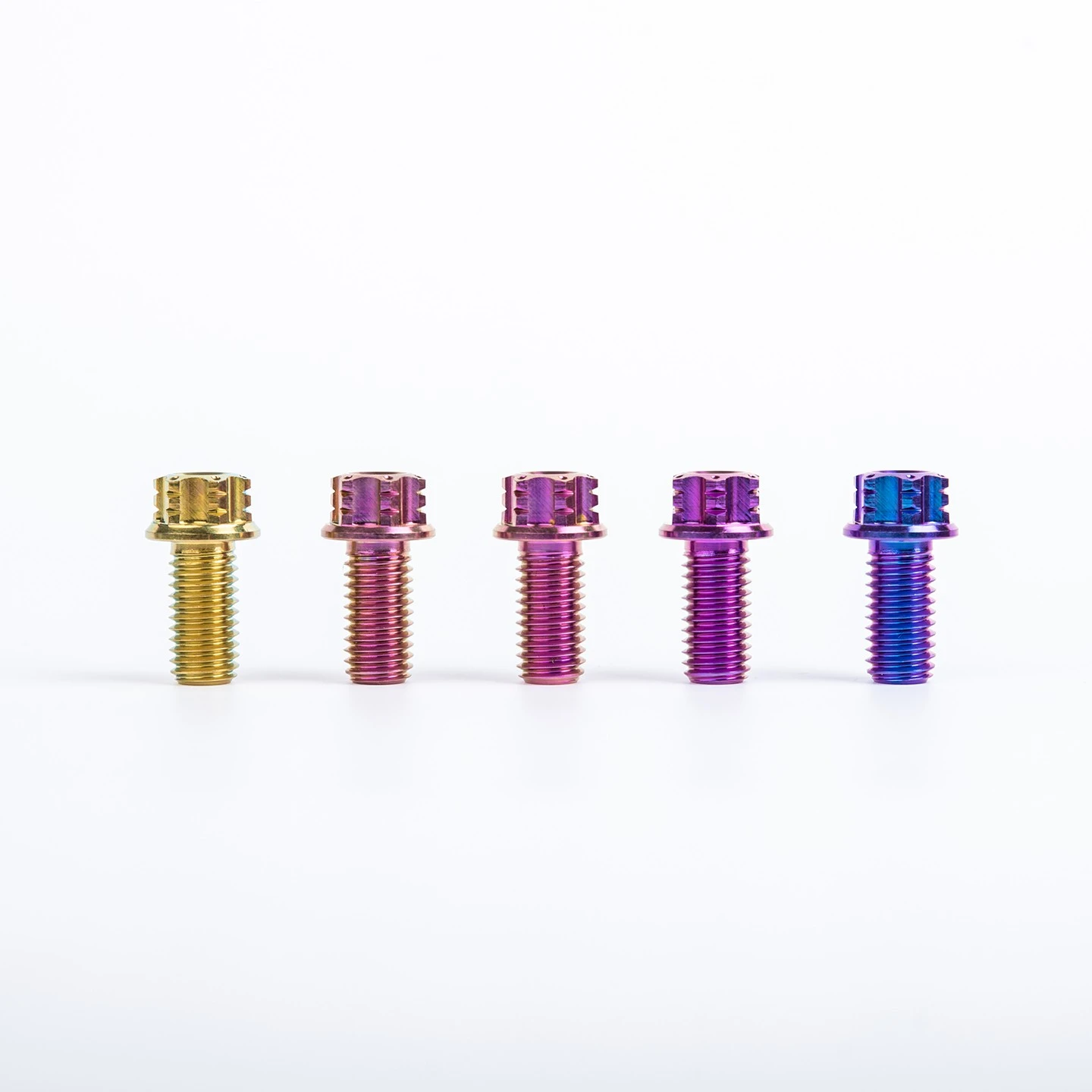

Now, let's talk about the specific machining operations for GR1 titanium alloy bolts.
Turning
Turning is one of the most common machining operations for bolts. When turning GR1 titanium alloy bolts, we need to select the appropriate cutting parameters. A lower cutting speed, around 30 - 60 m/min, is usually recommended. The feed rate can be in the range of 0.1 - 0.2 mm/r, and the depth of cut should be kept relatively small, about 0.5 - 2 mm. This helps to control the heat generation and reduce tool wear.
Drilling
Drilling holes in GR1 titanium alloy bolts can be a bit tricky. The chips tend to stick to the drill bit, which can cause clogging and breakage. To prevent this, we can use drills with a specialized geometry, such as a parabolic flute design, which helps with chip evacuation. Also, using a peck - drilling technique can be very effective. Peck - drilling involves periodically retracting the drill bit to clear the chips from the hole.
Threading
Threading GR1 titanium alloy bolts is another important operation. We need to use high - quality taps or dies. The taps should have a proper helix angle to ensure smooth chip flow. And just like in other machining operations, using coolant is essential to reduce friction and wear.
Despite these challenges, with the right knowledge, tools, and techniques, machining GR1 titanium alloy bolts is definitely doable. And the good news is that once you've mastered the process, you can produce high - quality bolts that offer excellent performance.
At our company, we've been in the business of supplying GR1 titanium alloy bolts for a long time. We've invested a lot in research and development to improve our machining processes. We use state - of - the - art equipment and follow strict quality control measures to ensure that our bolts meet the highest standards.
If you're in the market for high - quality GR1 titanium alloy bolts, we've got a wide range of products to offer. For example, we have Oil Pipe Bolts Titanium. These bolts are designed for oil pipe applications and are made with precision to ensure a perfect fit.
We also offer Flange Head Cap Bolts Titanium GR5 M10 X 20. These bolts are made from GR5 titanium alloy, which has even higher strength compared to GR1. They are suitable for applications where high strength is required.
And if you're looking for something different, we have Titanium caliper pins. These pins are made from high - quality titanium alloy and are designed to provide reliable performance in caliper applications.
In conclusion, while machining GR1 titanium alloy bolts has its challenges, it's not an impossible task. With the right approach, we can produce bolts that are not only high - quality but also meet the diverse needs of our customers. If you're interested in our products or have any questions about GR1 titanium alloy bolts, don't hesitate to get in touch. We're here to help you with your procurement needs and have a productive discussion about how our products can fit into your projects.
References
- "Machining of Titanium Alloys: A Review" by X. Y. Liu et al.
- "Manufacturing Processes for Engineering Materials" by S. Kalpakjian and S. R. Schmid.
