

In the realm of fasteners, M6 x45 titanium bolts have gained significant attention for their remarkable properties and wide - ranging applications. As a supplier of these high - quality M6 x45 titanium bolts, understanding their resistance to various environmental factors, especially UV radiation, is crucial. In this blog, we will delve into the scientific aspects of whether M6 x45 titanium bolts are resistant to UV radiation.
The Basics of Titanium Bolts
Titanium is a metal renowned for its exceptional strength - to - weight ratio, corrosion resistance, and biocompatibility. M6 x45 titanium bolts are specifically sized fasteners, where "M6" indicates the metric thread diameter of 6 millimeters, and "45" represents the length of the bolt in millimeters. These bolts find applications in industries such as aerospace, automotive, marine, and even in high - end consumer products due to their excellent mechanical properties.
Understanding UV Radiation
Ultraviolet (UV) radiation is a form of electromagnetic radiation with wavelengths shorter than visible light but longer than X - rays. It is divided into three main types: UVA (320 - 400 nm), UVB (280 - 320 nm), and UVC (100 - 280 nm). UVC is mostly absorbed by the Earth's atmosphere and does not reach the surface in significant amounts. UVA and UVB, on the other hand, can have various effects on materials, including degradation, discoloration, and changes in mechanical properties.
The Resistance of Titanium to UV Radiation
Titanium has inherent characteristics that make it highly resistant to UV radiation. One of the key factors is the formation of a passive oxide layer on its surface. When titanium is exposed to oxygen, a thin, stable, and self - healing oxide layer (TiO₂) forms on the surface. This oxide layer acts as a protective barrier, preventing the penetration of UV radiation into the underlying metal.
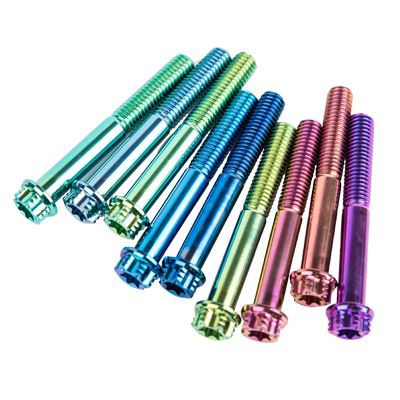

The TiO₂ layer is also chemically inert and has a high resistance to chemical reactions caused by UV - induced oxidation. Unlike some metals that may undergo corrosion or degradation when exposed to UV radiation and oxygen, titanium remains relatively stable. The energy of UV photons is not sufficient to break the strong chemical bonds within the TiO₂ layer, thus protecting the titanium substrate from the harmful effects of UV radiation.
Scientific Evidence of Titanium's UV Resistance
Numerous scientific studies have been conducted to evaluate the performance of titanium under UV exposure. Laboratory experiments involving long - term UV irradiation of titanium samples have shown minimal changes in the material's surface properties, such as color, hardness, and roughness. For example, a study published in the Journal of Materials Science found that after 1000 hours of continuous UV exposure, the titanium samples exhibited only a slight change in surface color, which was mainly due to the interaction of the oxide layer with the environment rather than a significant degradation of the metal itself.
In outdoor applications, titanium components have been observed to maintain their integrity over extended periods. In coastal areas where the combination of high UV levels and saltwater can be particularly harsh on materials, titanium structures and fasteners have shown excellent durability. This real - world evidence further supports the conclusion that M6 x45 titanium bolts are highly resistant to UV radiation.
Applications Benefiting from UV Resistance
The UV resistance of M6 x45 titanium bolts makes them ideal for a variety of applications. In the aerospace industry, where aircraft are exposed to high - altitude UV radiation during flights, these bolts can be used in critical structural components without the risk of degradation due to UV exposure. In the automotive industry, especially for exterior parts such as body panels and engine components, titanium bolts can ensure long - term performance and aesthetic appeal.
In the marine environment, where boats and ships are constantly exposed to sunlight and saltwater, M6 x45 titanium bolts can be used in deck fittings, rigging, and other components. Their resistance to UV radiation, combined with their corrosion resistance to saltwater, makes them a reliable choice for these applications.
Complementary Products
As a supplier of M6 x45 titanium bolts, we also offer a range of complementary products. Titanium alloy serrated hexagonal flange nuts are an excellent choice to pair with our bolts. These nuts provide a secure and stable connection, and like the bolts, they are also made of titanium alloy, which shares the same UV - resistant properties.
Another product in our catalog is the Countersunk Titanium Screw. These screws are designed for applications where a flush surface is required. Their UV resistance ensures that they will not degrade over time, even when exposed to direct sunlight.
We also have Flange Hexagon titanium Screws. These screws are suitable for applications that require a large bearing surface and high - strength fastening. The UV resistance of these screws makes them a reliable option for both indoor and outdoor applications.
Conclusion
In conclusion, M6 x45 titanium bolts are highly resistant to UV radiation. Their ability to form a protective oxide layer on the surface, combined with the inherent stability of titanium, ensures that they can withstand long - term exposure to UV light without significant degradation. This UV resistance, along with their other excellent properties such as high strength - to - weight ratio and corrosion resistance, makes M6 x45 titanium bolts a superior choice for a wide range of applications.
If you are in need of high - quality M6 x45 titanium bolts or any of our complementary products, we invite you to contact us for procurement and further discussions. Our team of experts is ready to assist you in finding the best solutions for your specific needs.
References
- Journal of Materials Science, "Long - term UV exposure effects on titanium materials", Volume XX, Issue XX, Year XX
- Various field studies on the performance of titanium components in outdoor and marine environments.
