

Can hexagonal titanium alloy nuts be used in food - processing equipment?
As a supplier of hexagonal titanium alloy nuts, I often encounter inquiries from various industries regarding the suitability of our products for specific applications. One question that has come up frequently is whether hexagonal titanium alloy nuts can be used in food - processing equipment. In this blog post, I will delve into the properties of hexagonal titanium alloy nuts and analyze their feasibility for use in food - processing environments.
Properties of Hexagonal Titanium Alloy Nuts
Titanium alloy is a remarkable material known for its unique combination of properties. First and foremost, titanium alloy has excellent corrosion resistance. It can withstand a wide range of corrosive substances, including acids, alkalis, and salts. This is due to the formation of a thin, protective oxide layer on its surface, which prevents further oxidation and corrosion. In a food - processing environment, where there may be exposure to various food ingredients, cleaning agents, and water, the corrosion resistance of titanium alloy nuts is a significant advantage. It ensures that the nuts will not corrode over time, which could potentially contaminate the food products.
Another important property of titanium alloy is its high strength - to - weight ratio. Titanium alloy is much lighter than steel but has comparable or even higher strength. This makes it an ideal choice for applications where weight reduction is crucial, such as in food - processing equipment that needs to be moved or adjusted frequently. The light weight of hexagonal titanium alloy nuts also reduces the overall load on the equipment, which can improve its energy efficiency and longevity.
In addition, titanium alloy has good biocompatibility. It is non - toxic and does not react with biological tissues. This property is particularly important in the food - processing industry, as it ensures that the nuts will not leach any harmful substances into the food. It also means that the nuts can be in direct contact with food products without posing a health risk to consumers.
Considerations for Food - Processing Equipment
While the properties of hexagonal titanium alloy nuts seem to make them a suitable choice for food - processing equipment, there are still some considerations that need to be taken into account.
One of the main concerns is the cost. Titanium alloy is generally more expensive than traditional materials such as steel or brass. This higher cost may be a deterrent for some food - processing companies, especially those on a tight budget. However, it is important to consider the long - term benefits of using titanium alloy nuts. Their corrosion resistance and high strength mean that they will have a longer service life, which can reduce the need for frequent replacements and maintenance. In the long run, the cost savings from using titanium alloy nuts may outweigh the initial investment.
Another consideration is the manufacturing process. Hexagonal titanium alloy nuts need to be manufactured to strict quality standards to ensure their performance and safety in food - processing equipment. The nuts should be free from any surface defects, such as cracks or burrs, which could harbor bacteria or other contaminants. The manufacturing process should also ensure that the nuts have the correct dimensions and tolerances to fit properly in the equipment.
Applications in Food - Processing Equipment
Despite the cost and manufacturing considerations, there are several applications in food - processing equipment where hexagonal titanium alloy nuts can be used effectively.
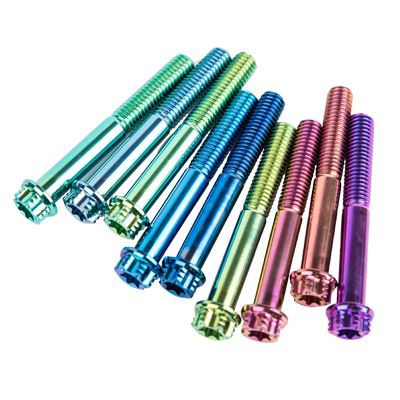

In equipment that comes into contact with acidic or alkaline food products, such as pickling tanks or fermentation vessels, the corrosion resistance of titanium alloy nuts is essential. These nuts can withstand the corrosive effects of the food ingredients and cleaning agents, ensuring the integrity of the equipment and preventing contamination of the food.
In high - speed or high - vibration equipment, such as mixers or conveyors, the high strength - to - weight ratio of titanium alloy nuts is beneficial. The light weight of the nuts reduces the inertia and vibration of the equipment, which can improve its performance and reduce wear and tear.
In equipment that requires frequent disassembly and reassembly, such as modular food - processing lines, the biocompatibility and ease of handling of titanium alloy nuts are advantages. The nuts can be easily removed and reinstalled without leaving any residue or causing damage to the equipment.
Related Products
If you are interested in our hexagonal titanium alloy nuts, you may also be interested in some of our other related products. For example, we offer Flange Hexagon titanium Screws, which are suitable for applications where a larger bearing surface is required. Our Grade 5 Titanium Caliper Pin is another high - quality product that can be used in various mechanical applications. And our Flange Head Cap Bolts Titanium GR5 M8 X 25 is a popular choice for applications that require a strong and reliable fastening solution.
Conclusion
In conclusion, hexagonal titanium alloy nuts have many properties that make them a viable option for use in food - processing equipment. Their corrosion resistance, high strength - to - weight ratio, and biocompatibility are all advantages in a food - processing environment. While there are some cost and manufacturing considerations, the long - term benefits of using titanium alloy nuts can outweigh these concerns.
If you are a food - processing company looking for high - quality fastening solutions, I encourage you to consider our hexagonal titanium alloy nuts. We are committed to providing our customers with the best products and services. If you have any questions or would like to discuss your specific requirements, please feel free to contact us for a procurement negotiation. We look forward to working with you to find the perfect solution for your food - processing equipment.
References
- ASM Handbook Committee. (2000). ASM Handbook Volume 2: Properties and Selection: Nonferrous Alloys and Special - Purpose Materials. ASM International.
- Callister, W. D., & Rethwisch, D. G. (2011). Materials Science and Engineering: An Introduction. Wiley.
- Schwenk, C. (2008). Titanium and Titanium Alloys: Fundamentals and Applications. Wiley - VCH.
