

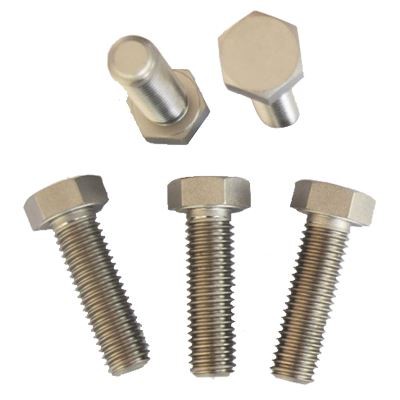
As a supplier of M8 x 30 titanium alloy bolts, one of the most frequent questions I encounter is whether these bolts can be used in high - temperature environments. This is a crucial concern, especially for industries where high - temperature operations are the norm, such as aerospace, automotive, and power generation. In this blog post, I'll delve into the properties of titanium alloy, the performance of M8 x 30 titanium alloy bolts in high - temperature settings, and provide some insights to help you make an informed decision.
Understanding Titanium Alloy
Titanium alloy is a remarkable material known for its high strength - to - weight ratio, excellent corrosion resistance, and biocompatibility. It is an alloy composed primarily of titanium with other elements such as aluminum, vanadium, and tin added to enhance specific properties. There are different grades of titanium alloy, each with its own unique characteristics. For example, Grade 5 titanium alloy, also known as Ti - 6Al - 4V, is one of the most widely used grades. It contains 6% aluminum and 4% vanadium, which gives it enhanced strength and heat resistance compared to pure titanium.
The structure of titanium alloy is what gives it its impressive properties. At room temperature, titanium has a hexagonal close - packed (HCP) crystal structure, known as alpha titanium. As the temperature rises, it undergoes a phase transformation to a body - centered cubic (BCC) structure, called beta titanium. This phase transformation is reversible, and the temperature at which it occurs depends on the alloy composition.
Performance of M8 x 30 Titanium Alloy Bolts in High - Temperature Environments
Strength Retention
One of the key factors to consider when using bolts in high - temperature environments is their ability to retain strength. Titanium alloy bolts generally exhibit good strength retention at elevated temperatures. For Grade 5 titanium alloy, it can maintain a significant portion of its room - temperature strength up to about 400 - 450°C (752 - 842°F). At these temperatures, the alloy's crystal structure starts to change, but the addition of alloying elements like aluminum and vanadium helps to slow down the rate of strength degradation.
However, as the temperature continues to rise above 450°C, the strength of the titanium alloy bolt will gradually decrease. The rate of strength loss depends on factors such as the duration of exposure and the specific alloy composition. Prolonged exposure to high temperatures can cause the alloy to undergo creep, which is a slow, time - dependent deformation under a constant load. This can lead to a reduction in the bolt's pre - load and potentially compromise the integrity of the joint.
Oxidation Resistance
Another important aspect is the oxidation resistance of titanium alloy bolts in high - temperature environments. Titanium forms a thin, protective oxide layer on its surface when exposed to air. This oxide layer acts as a barrier, preventing further oxidation of the underlying metal. At relatively low temperatures, this oxide layer is stable and provides good protection.
But as the temperature increases, the oxidation rate of titanium alloy also increases. Above about 500°C (932°F), the oxide layer may start to break down, and the titanium can react with oxygen in the air to form a thicker, less protective oxide layer. This can lead to a loss of material and a reduction in the bolt's cross - sectional area, which in turn affects its strength.

Thermal Expansion
Thermal expansion is also a critical consideration. When a bolt is subjected to high temperatures, it will expand. If the expansion is not properly accounted for, it can cause problems such as loosening of the bolt or excessive stress on the joint. Titanium alloy has a relatively low coefficient of thermal expansion compared to some other metals, such as steel. This means that it will expand less when heated, which can be an advantage in high - temperature applications where dimensional stability is important.
Applications and Considerations
Aerospace Industry
In the aerospace industry, high - temperature environments are common, especially in engine components and areas near the exhaust. M8 x 30 titanium alloy bolts can be used in certain parts where the temperature does not exceed the alloy's safe operating range. For example, they can be used in non - critical structural joints or in areas where the temperature is relatively moderate. However, for applications where the temperature is extremely high, such as in the combustion chamber of a jet engine, other materials with higher heat resistance may be required.
Automotive Industry
In the automotive industry, high - performance engines and exhaust systems can generate significant heat. M8 x 30 titanium alloy bolts can be used in some automotive applications, such as in the engine bay or in the exhaust system. They offer the advantage of being lightweight, which can contribute to improved fuel efficiency. However, care must be taken to ensure that the bolts are not exposed to temperatures that exceed their limits. For instance, if you are considering using these bolts in a high - performance racing car, you need to evaluate the temperature conditions in the specific area where the bolts will be installed.
Power Generation
In power generation plants, such as gas turbines and steam turbines, high - temperature environments are prevalent. Titanium alloy bolts can be used in some parts of the turbine, such as in the casing or in the connection of certain components. But similar to other industries, the temperature limits of the alloy must be considered. Engineers need to conduct detailed thermal analysis to determine whether M8 x 30 titanium alloy bolts are suitable for a particular application.
Related Products
If you are interested in other titanium alloy products, we also offer a range of related items. For example, we have Titanium wheel nuts GR5, which are made of high - quality titanium alloy and provide excellent performance. We also supply Titanium Alloy Hexagon Full Thread Bolts, which are suitable for various applications. And if you need a different size, our Flange Head Cap Bolts Titanium GR5 M8 X 60 might be a good option.
Conclusion
In conclusion, M8 x 30 titanium alloy bolts can be used in high - temperature environments, but with certain limitations. They offer good strength retention, oxidation resistance, and low thermal expansion up to a certain temperature range. However, as the temperature exceeds about 450 - 500°C, their performance may start to degrade. When considering using these bolts in high - temperature applications, it is essential to carefully evaluate the specific temperature conditions, the duration of exposure, and the requirements of the application.
If you are interested in purchasing M8 x 30 titanium alloy bolts or have any questions about their suitability for your high - temperature application, please feel free to contact us for a detailed discussion. We are committed to providing you with high - quality products and professional advice to meet your specific needs.
References
- "Titanium: A Technical Guide" by John C. Williams
- "Materials Science and Engineering: An Introduction" by William D. Callister Jr. and David G. Rethwisch
- Industry standards and technical reports on titanium alloy materials and fasteners.
