

Hey there! As a supplier of M6 titanium alloy nuts, I get asked a lot about how to choose the right ones for different projects. It's not as straightforward as it might seem at first glance, so I thought I'd share some tips and insights to help you make the best decision.
Understanding the Basics of M6 Titanium Alloy Nuts
First things first, let's talk about what M6 means. The "M" in M6 stands for metric, and the "6" refers to the nominal diameter of the nut in millimeters. So, an M6 nut is designed to fit an M6 bolt. Titanium alloy is a popular choice for nuts because it offers a great combination of strength, lightweight, and corrosion resistance.
Titanium alloys come in different grades, each with its own unique properties. The most common grades for nuts are Grade 2 and Grade 5. Grade 2 titanium is known for its excellent corrosion resistance and good formability. It's a great choice for applications where weight is a concern and corrosion might be an issue, like in marine or aerospace environments. Grade 5 titanium, also known as Ti-6Al-4V, is much stronger than Grade 2. It's often used in high-stress applications, such as in the automotive or military industries.
Consider Your Project Requirements
The first step in choosing the right M6 titanium alloy nuts for your project is to understand your project's specific requirements. Here are some key factors to consider:
Strength and Load Capacity
Think about the amount of stress and load the nuts will need to withstand. If your project involves high-stress applications, like in a racing car engine or a heavy-duty machinery, you'll probably want to go with Grade 5 titanium nuts. They can handle much higher loads compared to Grade 2 nuts. On the other hand, if the application is more low-stress, like in a consumer electronics device or a small DIY project, Grade 2 nuts might be sufficient.
Corrosion Resistance
Where will your project be used? If it's in a corrosive environment, such as near the ocean or in a chemical plant, corrosion resistance is crucial. Titanium is naturally resistant to corrosion, but Grade 2 titanium offers even better corrosion resistance than Grade 5 in some cases. So, for these types of applications, Grade 2 M6 titanium alloy nuts would be a good choice.
Temperature Resistance
Some projects might be exposed to extreme temperatures. Titanium has good temperature resistance, but it's important to know the specific temperature range your project will operate in. Grade 5 titanium can maintain its strength at higher temperatures compared to Grade 2, so if your project involves high-temperature applications, Grade 5 nuts are the way to go.
Size and Thread Pitch
Make sure the M6 nuts you choose have the right thread pitch for your bolts. The thread pitch refers to the distance between the threads on the nut. It's important to match the thread pitch of the nut with the bolt to ensure a proper fit. Most M6 bolts have a standard thread pitch of 1.0 mm, but it's always a good idea to double-check.
Other Features to Look For
In addition to the basic requirements, there are some other features you might want to consider when choosing M6 titanium alloy nuts:
Finish
The finish of the nut can affect its appearance and performance. Some common finishes for titanium nuts include natural, anodized, and passivated. A natural finish gives the nut a raw, metallic look. Anodizing can add color and improve the corrosion resistance of the nut. Passivation is a chemical process that removes any iron particles from the surface of the nut, which can help prevent corrosion.
Shape
M6 titanium alloy nuts come in different shapes, such as hexagon, square, and wing. The shape you choose depends on the application and the tool you'll be using to tighten the nut. Hexagon nuts are the most common and are easy to tighten with a wrench. Square nuts are sometimes used in applications where a larger surface area is needed for gripping. Wing nuts are designed to be tightened by hand, so they're convenient for applications where you need to make frequent adjustments.
Compatibility with Other Components
It's important to make sure the M6 titanium alloy nuts you choose are compatible with the other components in your project. For example, if you're using M6 bolts made of a different material, like steel, you need to consider the potential for galvanic corrosion. Galvanic corrosion occurs when two different metals are in contact with each other in the presence of an electrolyte, such as water or salt. To prevent galvanic corrosion, you can use a non-conductive washer or choose nuts and bolts made of the same material.

Quality and Certification
When buying M6 titanium alloy nuts, it's important to choose a reliable supplier who offers high-quality products. Look for nuts that are made to industry standards and have the necessary certifications. For example, in the aerospace industry, nuts need to meet strict quality and performance standards, such as AS9100. A reputable supplier will be able to provide you with the relevant certifications and documentation to ensure the quality of the nuts.
Related Products
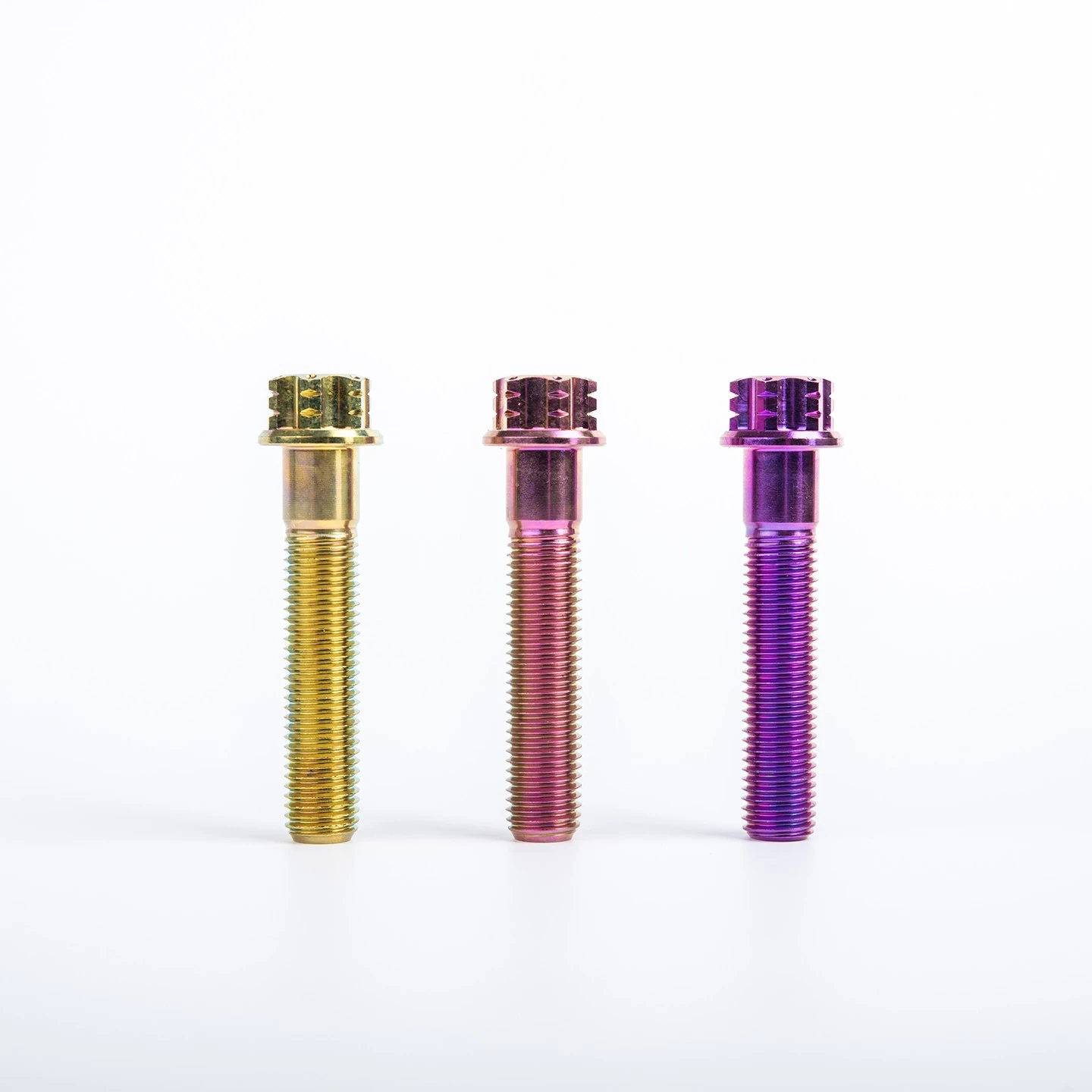
If you're working on a project that requires other titanium alloy fasteners, we also offer a range of related products. For example, we have Motorcycle flange plum titanium alloy screws that are perfect for motorcycle applications. These screws offer a combination of strength and style. We also have Flange Head Cap Bolts Titanium GR5 M10 X 50 for high-stress applications. And if you're looking for something different, our Titanium Pan Head Bolts are a great option.
Conclusion
Choosing the right M6 titanium alloy nuts for your project is all about understanding your project's requirements and considering factors like strength, corrosion resistance, temperature resistance, and compatibility. By taking the time to do your research and choose a reliable supplier, you can ensure that your project is a success.
If you have any questions or need help choosing the right M6 titanium alloy nuts for your project, don't hesitate to reach out. We're here to assist you with all your fastener needs. Whether you're a professional engineer working on a large-scale project or a DIY enthusiast working on a small project at home, we have the expertise and products to meet your requirements. Contact us today to start the procurement process and get the best M6 titanium alloy nuts for your project.
References
- "Titanium Alloys: Properties, Processing, and Applications" by John C. Williams
- "Fasteners Handbook" by H. Peter J. Blau
