

Hey there! As a supplier of M8 x 40 titanium alloy bolts, I get asked a lot about how to ensure the tightness of these bolts. It's a crucial question, especially when you're dealing with applications where safety and reliability are non - negotiable. So, let's dive right in and explore the ins and outs of keeping those M8 x 40 titanium alloy bolts tight.
Understanding Titanium Alloy Bolts
First off, let's talk a bit about titanium alloy bolts. Titanium is an amazing material. It's super strong, yet lightweight, and has excellent corrosion resistance. The M8 x 40 specification means that the bolt has a diameter of 8mm and a length of 40mm. These bolts are used in a wide range of industries, from aerospace to automotive, and even in high - end consumer products.
But titanium alloy also has some unique properties that we need to take into account when it comes to tightening. Unlike steel bolts, titanium has a lower modulus of elasticity. This means that it stretches more under the same load, and it can also experience something called "creep" over time, which is a slow, permanent deformation under a constant load.
Proper Installation
The first step in ensuring tightness is proper installation. You've gotta make sure that the mating surfaces are clean and free of any debris, rust, or oil. Even a tiny bit of dirt can affect the torque transfer and lead to an improper fit.
When you're installing the M8 x 40 titanium alloy bolts, use the right tools. A high - quality torque wrench is a must. This allows you to apply the correct amount of torque, which is crucial for achieving the right level of tightness. Over - tightening can cause the bolt to break or damage the threads, while under - tightening can result in the bolt coming loose over time.
The recommended torque for M8 x 40 titanium alloy bolts can vary depending on the specific application and the grade of titanium used. As a general rule, it's always a good idea to refer to the manufacturer's specifications. If you don't have that information, you can do some research online or consult with a professional engineer.
Lubrication
Lubrication is another important factor. Using a suitable lubricant can help reduce friction between the bolt and the nut or the mating surface. This allows for a more consistent torque application and can also prevent galling, which is a form of wear that occurs when two metal surfaces rub against each other under high pressure.

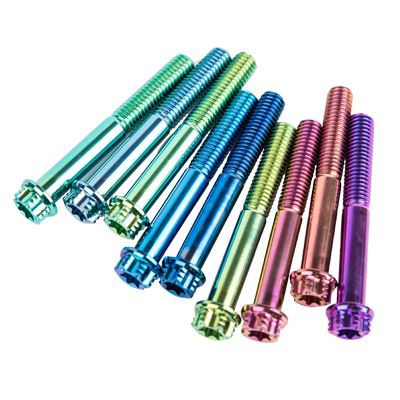
There are several types of lubricants that can be used with titanium alloy bolts. Anti - seize compounds are a popular choice. They're designed to prevent the bolts from seizing up and make it easier to remove them in the future if needed. Just make sure that the lubricant you choose is compatible with titanium. Some lubricants, like those containing sulfur or chlorine, can react with titanium and cause corrosion.
Thread Locking
To add an extra layer of security, you can use thread - locking compounds. These are adhesives that are applied to the threads of the bolt before installation. Once the bolt is tightened, the compound cures and locks the threads in place, preventing the bolt from loosening due to vibration or other external forces.
There are two main types of thread - locking compounds: anaerobic and dry - film. Anaerobic compounds cure in the absence of air, so they're perfect for use in tight spaces like bolt threads. Dry - film compounds, on the other hand, are applied as a thin film and dry to form a strong bond.
When using thread - locking compounds, make sure to follow the manufacturer's instructions carefully. Apply the right amount of compound, and give it enough time to cure before applying any load to the bolt.
Regular Inspection
Even after proper installation and the use of thread - locking compounds, it's important to conduct regular inspections. Check the bolts periodically for any signs of loosening, such as movement or a change in the torque. You can also look for any signs of damage, like cracks or stripped threads.
If you notice any issues, take action immediately. Tighten the bolts if they're loose, or replace them if they're damaged. It's always better to catch a problem early than to wait until it causes a major failure.
Using the Right Accessories
Sometimes, using the right accessories can also help ensure tightness. For example, using a washer can distribute the load more evenly across the mating surface, reducing the risk of damage to the material. There are different types of washers available, such as flat washers and spring washers. Spring washers are especially useful in applications where there is a lot of vibration, as they can help maintain the tension on the bolt.
Other Related Products
If you're in the market for other titanium alloy products, we also offer Titanium Alloy Hexagon Socket Head Bolts and Titanium cnc handlebar cover. These products are made with the same high - quality titanium alloy as our M8 x 40 bolts and are designed to meet the needs of various industries. And if you're looking for something different, check out our Flange Hexagon titanium Screws.
Contact for Purchase
If you're interested in our M8 x 40 titanium alloy bolts or any of our other products, don't hesitate to reach out. We're here to help you find the right solutions for your needs. Whether you're a small business or a large corporation, we can provide you with the high - quality products and excellent service that you deserve.
Conclusion
Ensuring the tightness of M8 x 40 titanium alloy bolts is a multi - step process that involves proper installation, the use of the right tools and lubricants, thread locking, regular inspection, and the use of appropriate accessories. By following these steps, you can minimize the risk of bolts coming loose and ensure the safety and reliability of your applications.
Remember, if you have any questions or need more information, don't be afraid to ask. We're always happy to help. So, go ahead and take the first step towards getting the right M8 x 40 titanium alloy bolts for your project, and let's make sure everything stays tight and secure!
References
- "Mechanical Properties of Titanium Alloys" - Metallurgy Handbook
- "Torque Specification Guidelines for Titanium Bolts" - Engineering Journal
- "Thread - Locking Compounds: A Comprehensive Guide" - Industrial Fasteners Magazine
