

What is the Hardness of Self - locking Titanium Alloy Nuts?
As a supplier of self - locking titanium alloy nuts, I often get asked about the hardness of these remarkable components. In this blog, I'll delve into the concept of hardness in self - locking titanium alloy nuts, explore the factors that influence it, and explain why it matters in various applications.
Understanding Hardness in Materials
Hardness is a fundamental property of materials that refers to their resistance to local deformation, such as indentation, scratching, or abrasion. In the context of self - locking titanium alloy nuts, hardness plays a crucial role in determining their performance, durability, and reliability. There are several methods to measure hardness, with the most common ones being the Rockwell, Brinell, and Vickers hardness tests. Each test has its own scale and is suitable for different types of materials and applications.
Hardness of Titanium Alloys
Titanium alloys are known for their excellent combination of strength, light weight, and corrosion resistance. The hardness of titanium alloys can vary significantly depending on their composition and the heat treatment they undergo. For example, the widely used Ti - 6Al - 4V (Grade 5) titanium alloy has a hardness that typically ranges from 33 to 38 HRC (Rockwell C scale) in the annealed condition. This hardness provides a good balance between strength and ductility, making it suitable for a wide range of applications, including aerospace, automotive, and medical industries.
When it comes to self - locking titanium alloy nuts, the hardness is carefully engineered to meet specific requirements. The self - locking feature of these nuts relies on a combination of factors, including the material's hardness, the design of the locking mechanism, and the surface finish. A nut that is too soft may not provide sufficient locking force, leading to loosening over time. On the other hand, a nut that is too hard may be brittle and prone to cracking or damage during installation or use.

Factors Influencing the Hardness of Self - locking Titanium Alloy Nuts
- Alloy Composition: The addition of different alloying elements can significantly affect the hardness of titanium alloys. For instance, aluminum and vanadium are commonly added to titanium to improve its strength and hardness. Other elements, such as iron, oxygen, and nitrogen, can also have an impact on the material's properties. By carefully controlling the alloy composition, manufacturers can tailor the hardness of self - locking titanium alloy nuts to meet the specific needs of different applications.
- Heat Treatment: Heat treatment is a critical process in the production of titanium alloy nuts. By heating the nuts to specific temperatures and then cooling them at controlled rates, manufacturers can alter the microstructure of the material, which in turn affects its hardness. For example, solution heat treatment followed by aging can increase the hardness and strength of titanium alloys. However, improper heat treatment can lead to undesirable effects, such as reduced ductility or the formation of brittle phases.
- Cold Working: Cold working, such as rolling or forging, can also increase the hardness of titanium alloy nuts. During cold working, the material is deformed at room temperature, which causes the grains in the microstructure to become elongated and aligned. This process, known as work hardening, increases the material's strength and hardness. However, excessive cold working can also lead to cracking or other defects, so it must be carefully controlled.
Importance of Hardness in Self - locking Titanium Alloy Nuts
- Locking Performance: The hardness of self - locking titanium alloy nuts is directly related to their locking performance. A nut with the appropriate hardness can provide a reliable and long - lasting locking force, preventing the nut from loosening due to vibration, thermal expansion, or other factors. This is particularly important in applications where safety and reliability are critical, such as in aerospace and automotive engines.
- Wear Resistance: In many applications, self - locking titanium alloy nuts are subjected to repeated loading and unloading, as well as friction and abrasion. A nut with high hardness is more resistant to wear, which can extend its service life and reduce the need for frequent replacement. This is especially beneficial in applications where maintenance is difficult or costly, such as in deep - sea oil rigs or high - altitude aircraft.
- Corrosion Resistance: Titanium alloys are known for their excellent corrosion resistance, and the hardness of the material can also play a role in this property. A harder surface can provide better protection against corrosion by forming a more stable oxide layer. This is particularly important in applications where the nuts are exposed to harsh environments, such as in chemical processing plants or marine applications.
Applications of Self - locking Titanium Alloy Nuts
Self - locking titanium alloy nuts are used in a wide range of industries due to their unique combination of properties. Here are some examples:
- Aerospace Industry: In the aerospace industry, self - locking titanium alloy nuts are used in critical applications, such as aircraft engines, landing gear, and structural components. The high strength - to - weight ratio and excellent corrosion resistance of titanium alloys make them ideal for these applications, where weight reduction and reliability are of utmost importance. For example, Titanium caliper pins are often used in combination with self - locking titanium alloy nuts in aircraft braking systems.
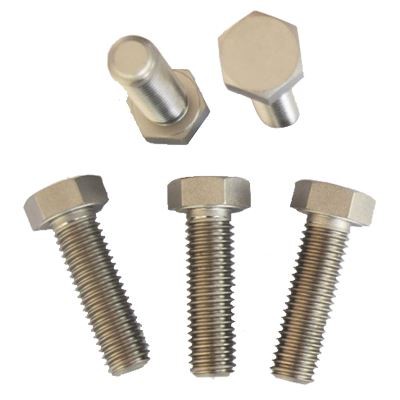
- Automotive Industry: In the automotive industry, self - locking titanium alloy nuts are used in high - performance engines, suspension systems, and exhaust systems. The light weight and high strength of titanium alloys can improve the fuel efficiency and performance of vehicles. For instance, Titanium Alloy Hexagon Full Thread Bolts are commonly used with self - locking titanium alloy nuts in racing cars to reduce weight and increase the overall performance of the vehicle.
- Medical Industry: In the medical industry, self - locking titanium alloy nuts are used in orthopedic implants, dental fixtures, and surgical instruments. The biocompatibility and corrosion resistance of titanium alloys make them suitable for these applications, where the material must be in contact with the human body for extended periods of time. For example, Flange Head Cap Bolts Titanium GR5 M6 X 15 are often used in combination with self - locking titanium alloy nuts in spinal implants.
Conclusion
The hardness of self - locking titanium alloy nuts is a critical property that affects their performance, durability, and reliability. By understanding the factors that influence hardness, such as alloy composition, heat treatment, and cold working, manufacturers can produce nuts that meet the specific requirements of different applications. Whether you're in the aerospace, automotive, or medical industry, self - locking titanium alloy nuts offer a unique combination of properties that make them an excellent choice for a wide range of applications.
If you're interested in purchasing self - locking titanium alloy nuts or have any questions about their hardness or other properties, I encourage you to contact me for a detailed discussion. I'm here to provide you with the best solutions for your specific needs.
References
- Callister, W. D., & Rethwisch, D. G. (2017). Materials Science and Engineering: An Introduction. Wiley.
- ASM Handbook Committee. (2000). ASM Handbook Volume 2: Properties and Selection: Nonferrous Alloys and Special - Purpose Materials. ASM International.
- Boyer, R. R., Welsch, G., & Collings, E. W. (1994). Materials Properties Handbook: Titanium Alloys. ASM International.
