

Hey there! As a supplier of M10×20 titanium alloy bolts, I often get asked if these bolts can be used in nuclear power plants. It's a pretty critical question, considering the high - stakes environment of nuclear facilities. So, let's dig into this topic and see if our M10×20 titanium alloy bolts are a good fit for nuclear power plants.
First off, let's talk about what makes titanium alloy such an interesting material. Titanium alloy is known for its excellent corrosion resistance. It can withstand harsh chemical environments without rusting or degrading easily. In a nuclear power plant, there are all sorts of chemicals and high - pressure fluids running around. Corrosion can be a huge problem as it can weaken the structural integrity of components over time. So, in terms of corrosion resistance, titanium alloy has a big advantage.
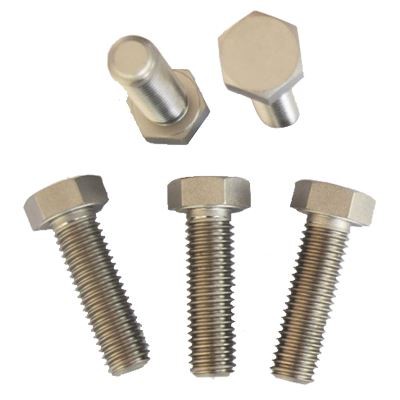

Another great thing about titanium alloy is its high strength - to - weight ratio. This means that it can handle a lot of stress while being relatively lightweight. In a nuclear power plant, where space and weight are often at a premium, using lightweight yet strong materials can be a real game - changer. For example, if you're building a complex piping system, using M10×20 titanium alloy bolts can help reduce the overall weight of the structure without sacrificing strength.
But it's not all sunshine and rainbows. Nuclear power plants are extremely sensitive environments. They operate under high temperatures, high pressures, and are exposed to radiation. Titanium alloy has some limitations when it comes to these extreme conditions.
Let's start with temperature. Titanium alloy can lose some of its strength at very high temperatures. In a nuclear reactor core, temperatures can reach several hundred degrees Celsius. If the M10×20 titanium alloy bolts are placed in an area where they're exposed to these extreme temperatures for long periods, their mechanical properties might change. This could lead to the bolts becoming less reliable and potentially failing, which is a huge no - no in a nuclear power plant.
Radiation is another concern. While titanium alloy is generally considered to have good radiation resistance compared to some other materials, long - term exposure to high - level radiation can still cause some issues. Radiation can cause changes in the crystal structure of the titanium alloy, which might affect its mechanical and chemical properties. For example, it could make the bolts more brittle, increasing the risk of cracking.
Now, let's talk about the specific size of our bolts, M10×20. The size of a bolt is crucial in any application, and nuclear power plants are no exception. The M10×20 bolts need to be able to provide the right amount of clamping force. In a nuclear power plant, where components need to be tightly sealed to prevent leaks of radioactive materials, the clamping force of the bolts is of utmost importance. If the bolts are too small or too weak, they might not be able to hold the components together properly. On the other hand, if they're not installed correctly, it can also lead to problems.
In some parts of a nuclear power plant, the M10×20 titanium alloy bolts might be a good fit. For example, in non - critical areas where the temperature and radiation levels are relatively low, such as in some of the auxiliary systems or in the outer structures of the power plant. These areas still need reliable fastening solutions, and the corrosion resistance and strength - to - weight ratio of titanium alloy can be beneficial.
However, in the core areas of the nuclear power plant, where the conditions are the most extreme, it's probably not a good idea to use our M10×20 titanium alloy bolts. Instead, more specialized materials that are specifically designed to withstand high temperatures, high pressures, and radiation are usually preferred.
If you're in the market for other titanium products, we also offer Titanium GR5 automobile nuts which are great for automotive applications. These nuts are made from high - quality titanium alloy and are designed to provide a reliable fastening solution for your vehicles.
We also have GR5 Titanium Alloy Hex Bolts. These bolts are similar to our M10×20 bolts but come in different sizes and are suitable for a variety of applications. Whether you're working on a small project or a large - scale industrial application, these hex bolts can be a great choice.
And if you're into automotive customization, our Titanium Exhaust Mount Bolt Kit is a must - have. It's made from titanium alloy, which means it's lightweight and corrosion - resistant, perfect for your exhaust system.
In conclusion, while our M10×20 titanium alloy bolts have some great properties, their use in nuclear power plants is limited. They might be suitable for non - critical areas, but in the core and high - stress areas of a nuclear power plant, other materials are usually a better option.
If you're interested in our M10×20 titanium alloy bolts or any of our other products, don't hesitate to reach out for a purchase negotiation. We're always happy to discuss your specific needs and find the best solution for you.
References
- "Materials Science and Engineering: An Introduction" by William D. Callister Jr. and David G. Rethwisch
- "Nuclear Power Technology" by John R. Lamarsh and Anthony J. Baratta
