

Hey there! I'm a supplier of hexagonal titanium alloy nuts, and today I wanna chat about something super important: the biocompatibility of these nuts.
First off, let's break down what biocompatibility means. In simple terms, it's how well a material gets along with living tissues. When a material is biocompatible, it doesn't cause any harmful reactions like inflammation, rejection, or toxicity when it comes into contact with the body. This is crucial, especially in medical applications where implants and devices need to be safe and effective.
So, do hexagonal titanium alloy nuts have good biocompatibility? The short answer is yes, and here's why. Titanium is known for its excellent biocompatibility. It has a unique ability to form a thin, stable oxide layer on its surface when exposed to oxygen. This oxide layer acts as a protective barrier, preventing the metal from reacting with the body's tissues and fluids. It's like a shield that keeps the titanium safe from corrosion and also stops it from releasing any harmful substances into the body.
One of the key factors contributing to titanium's biocompatibility is its low allergenic potential. Unlike some other metals, titanium rarely causes allergic reactions in people. This is a huge advantage, especially for patients who may have sensitive skin or allergies to other materials. When it comes to medical implants, this means fewer complications and a better overall experience for the patient.
Another important aspect is titanium's mechanical properties. It's strong, lightweight, and has good fatigue resistance. These properties make it ideal for use in medical devices and implants. For example, hexagonal titanium alloy nuts can be used in orthopedic implants to hold bones together. Their strength ensures that the implant stays in place, while their lightweight nature reduces the stress on the surrounding tissues.
Now, let's talk about some of the specific applications where hexagonal titanium alloy nuts' biocompatibility comes in handy. In the dental industry, titanium is widely used for dental implants. These implants are designed to replace missing teeth and need to be compatible with the jawbone and surrounding tissues. Hexagonal titanium alloy nuts can be used to secure the implant in place, providing a stable foundation for the artificial tooth.
In orthopedic surgery, titanium implants are used to treat fractures, joint replacements, and spinal disorders. The biocompatibility of hexagonal titanium alloy nuts ensures that they can be safely used in these applications without causing any adverse reactions. They help to hold the implant components together, allowing the body to heal and recover more effectively.
But biocompatibility isn't just important in medical applications. It also has implications in other industries. For example, in the aerospace and automotive industries, titanium is used because of its high strength-to-weight ratio and corrosion resistance. While these applications may not involve direct contact with the human body, the biocompatibility of titanium still plays a role in ensuring the safety and reliability of the products.
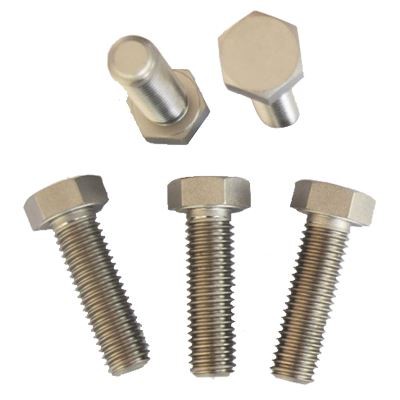
If you're in the market for high-quality hexagonal titanium alloy nuts, we've got you covered. We offer a wide range of products, including Motorcycle Titanium Alloy Motor Nut, GR5 Titanium Alloy Hex Bolts, and CNC Ducati titanium nuts. Our nuts are made from the highest quality titanium alloys, ensuring excellent biocompatibility and performance.

Whether you're a medical device manufacturer, an orthopedic surgeon, or someone in the aerospace or automotive industry, we can provide you with the right hexagonal titanium alloy nuts for your needs. Our team of experts is always available to answer your questions and help you find the best solution for your application.
So, if you're interested in learning more about our products or have any questions about the biocompatibility of hexagonal titanium alloy nuts, don't hesitate to get in touch. We're here to help you make the right choice and ensure the success of your projects.
In conclusion, hexagonal titanium alloy nuts have excellent biocompatibility, making them a great choice for a wide range of applications. Their unique properties, including low allergenic potential, good mechanical properties, and corrosion resistance, make them ideal for use in medical devices, implants, and other industries. If you're looking for high-quality hexagonal titanium alloy nuts, look no further. Contact us today to start the conversation and explore how our products can meet your needs.
References:
- "Biomaterials Science: An Introduction to Materials in Medicine" by Buddy D. Ratner, Allan S. Hoffman, Frederick J. Schoen, and Jeffrey E. Lemons
- "Titanium and Titanium Alloys: Fundamentals and Applications" by David E. Alman
