

Lubrication is a common practice in mechanical engineering, often employed to reduce friction, prevent wear, and enhance the performance of various components. When it comes to titanium alloy flat washers, a question that frequently arises is whether they need lubrication. As a supplier of titanium alloy flat washers, I'll delve into this topic from multiple perspectives to provide a comprehensive answer.
Understanding Titanium Alloy Flat Washers
Titanium alloy flat washers are essential components in many mechanical assemblies. They are typically used to distribute the load of a threaded fastener, such as a bolt or a nut, over a larger area. This helps prevent damage to the surface of the connected parts and ensures a more secure and stable joint. Titanium alloys are chosen for these washers due to their excellent properties, including high strength - to - weight ratio, corrosion resistance, and good fatigue resistance.
Factors Influencing the Need for Lubrication
Friction and Wear
Friction is an inevitable phenomenon when two surfaces are in contact and move relative to each other. In the case of titanium alloy flat washers, friction can occur between the washer and the mating surface (e.g., the head of a bolt or the surface of the component being fastened) and between the washer and the fastener itself. High friction can lead to increased wear on the washer and the mating parts, potentially reducing the lifespan of the joint.
Lubrication can significantly reduce friction coefficients. By applying a lubricant between the surfaces, a thin film is formed that separates the two contacting surfaces, allowing them to slide more smoothly. This not only reduces wear but also makes it easier to tighten or loosen the fastener. For example, in applications where the fasteners need to be frequently adjusted or removed, lubrication can save time and effort.
Corrosion Protection
Although titanium alloys are known for their excellent corrosion resistance, in certain harsh environments, additional protection may be required. Lubricants can act as a barrier between the titanium alloy flat washer and the surrounding environment, preventing moisture, chemicals, and other corrosive agents from coming into direct contact with the washer.
For instance, in marine applications where the components are exposed to saltwater, a lubricant with anti - corrosion properties can help extend the service life of the washers. Some lubricants also contain additives that can passivate the titanium surface, further enhancing its corrosion resistance.
Assembly and Disassembly
During the assembly process, lubrication can make it easier to install the fasteners. It reduces the torque required to tighten the bolts or nuts, which can prevent over - tightening and potential damage to the components. This is especially important in precision assemblies where accurate torque values need to be maintained.
On the other hand, during disassembly, lubricated washers are less likely to seize or gall. Seizing occurs when the two surfaces stick together due to high friction and pressure, making it difficult or even impossible to remove the fastener without causing damage. Lubrication can prevent this problem, ensuring that the components can be disassembled safely and efficiently.
Situations Where Lubrication May Not Be Necessary
Low - Load and Low - Movement Applications
In applications where the load on the titanium alloy flat washer is relatively low and there is minimal relative movement between the washer and the mating parts, lubrication may not be essential. For example, in some static structures where the fasteners are only used to hold components in place and there is no vibration or dynamic loading, the natural properties of the titanium alloy may be sufficient to prevent wear and corrosion.
Clean and Dry Environments
If the operating environment is clean and dry, with no exposure to moisture, dust, or chemicals, the need for lubrication is reduced. Titanium alloys have good self - lubricating properties to some extent, and in such ideal conditions, they can maintain their performance without additional lubrication.
Types of Lubricants Suitable for Titanium Alloy Flat Washers
Greases
Greases are a popular choice for lubricating titanium alloy flat washers. They are thick and sticky, which allows them to stay in place for a long time. Greases typically contain a base oil (such as mineral oil or synthetic oil) and a thickening agent (such as lithium soap). They can provide good lubrication and corrosion protection.
Oils
Oils are another option. They are more fluid than greases and can penetrate into small gaps more easily. Synthetic oils are often preferred for titanium alloy applications due to their better performance at high and low temperatures and their resistance to oxidation.
Dry Lubricants
Dry lubricants, such as graphite or molybdenum disulfide, can also be used. They are suitable for applications where a clean and non - greasy lubrication is required. Dry lubricants form a thin, solid film on the surface, reducing friction and wear.
Our Product Range and Compatibility
As a supplier of titanium alloy flat washers, we offer a wide range of products to meet different customer needs. Our washers are made from high - quality titanium alloys, ensuring excellent performance and reliability. We also understand the importance of compatibility between the washers and the lubricants.
When selecting a lubricant for our titanium alloy flat washers, it is crucial to ensure that the lubricant does not react with the titanium alloy. Some chemicals in lubricants may cause corrosion or other forms of degradation of the titanium surface. We can provide technical support to our customers to help them choose the most suitable lubricant for their specific applications.
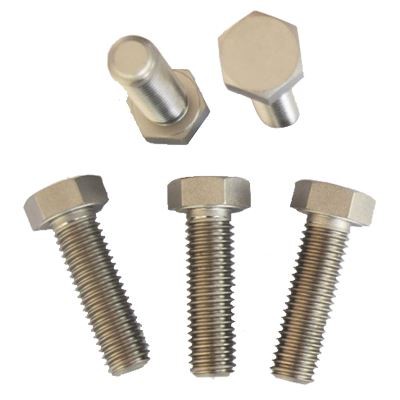
In addition to titanium alloy flat washers, we also supply other related products, such as Titanium Flange Head Cap Bolts, GR5 Titanium Alloy Hex Bolts, and Titanium Heightened Flange Surface Nuts. These products are designed to work together seamlessly, providing a complete solution for your mechanical fastening needs.
Conclusion
In conclusion, whether titanium alloy flat washers need lubrication depends on various factors, including the application, the operating environment, and the expected lifespan of the joint. In many cases, lubrication can offer significant benefits, such as reducing friction, preventing wear, and protecting against corrosion. However, in some specific situations, lubrication may not be necessary.

As a professional supplier of titanium alloy flat washers, we are committed to providing our customers with high - quality products and comprehensive technical support. If you have any questions about the lubrication of our titanium alloy flat washers or need assistance in selecting the right products for your application, please feel free to contact us for procurement and further discussions.
References
- "Mechanical Design Handbook" by Robert C. Juvinall and Kurt M. Marshek
- "Titanium: A Technical Guide" by John C. Williams
- "Lubrication Fundamentals" by Bernard J. Hamrock, Steven R. Schmid, and Bo O. Jacobson
