

Hey there! As a supplier of hexagonal titanium alloy nuts, I often get asked about the fatigue life of these little but crucial components. So, I thought I'd take some time to break it down for you all.
First off, let's understand what fatigue life means. Fatigue life refers to the number of loading cycles a material or a component can endure before it fails due to fatigue. In simpler terms, it's how many times you can use a nut under certain conditions before it starts to crack or break.
Hexagonal titanium alloy nuts are super popular in various industries. They're used in aerospace, automotive, and even in some high - end consumer products. The reason for their wide usage is that titanium alloy has some amazing properties. Titanium alloy is lightweight, which is a huge plus in industries like aerospace where every gram counts. It also has high strength, good corrosion resistance, and can withstand high temperatures.
But what about the fatigue life of hexagonal titanium alloy nuts? Well, it depends on a bunch of factors.
Material Properties
The composition of the titanium alloy plays a big role. Different alloys have different fatigue resistances. For example, the widely used Ti - 6Al - 4V (GR5) alloy has a good balance of strength, ductility, and fatigue resistance. This alloy contains 6% aluminum and 4% vanadium, which gives it enhanced mechanical properties. When we make hexagonal nuts from this alloy, they can usually handle a relatively large number of loading cycles.
Manufacturing Process
How the nuts are made also affects their fatigue life. If the manufacturing process is not up to par, there could be defects in the nuts. For instance, during the forging or machining process, if there are surface scratches or internal voids, these can act as stress concentrators. Stress concentrators are areas where the stress is much higher than the average stress in the component. When the nut is loaded, these areas are more likely to crack, reducing the overall fatigue life.
At our place, we use state - of - the - art manufacturing techniques to ensure the quality of our hexagonal titanium alloy nuts. We start with high - quality raw materials and use precision machining to get the right dimensions and surface finish. This helps in minimizing the chances of defects and increasing the fatigue life of our nuts.
Operating Conditions
The conditions under which the nuts are used are extremely important. The load type is a key factor. If the nuts are subjected to static loads, they can usually last longer compared to when they're under dynamic loads. Dynamic loads, such as vibrations or cyclic loading, can cause the stress in the nut to change over time, which can lead to fatigue failure more quickly.
The environment also matters. If the nuts are used in a corrosive environment, like in the marine industry, the corrosion can weaken the material. Even a small amount of corrosion can reduce the cross - sectional area of the nut and increase the stress in the remaining material. This, in turn, can shorten the fatigue life.
Calculating Fatigue Life
Calculating the exact fatigue life of hexagonal titanium alloy nuts is not an easy task. There are some standard methods and equations based on material science and mechanics. One common approach is to use S - N curves. S - N curves show the relationship between the stress amplitude (S) and the number of cycles to failure (N).
To get an S - N curve for a specific titanium alloy, a series of tests are conducted in the laboratory. Specimens are subjected to different stress amplitudes, and the number of cycles until failure is recorded. Based on these results, an S - N curve can be plotted. However, it's important to note that these curves are based on ideal conditions, and in real - world applications, the actual fatigue life may be different due to the factors we discussed earlier.
Our Products and Their Fatigue Life
We're confident in the quality of our hexagonal titanium alloy nuts. We've done extensive testing on our products to ensure they have a good fatigue life. Our nuts are made from high - grade titanium alloys, and we follow strict quality control measures during the manufacturing process.
If you're in the market for high - quality hexagonal titanium alloy nuts, we've got some great options for you. You can check out our Heightened Increasing NutTitanium. These nuts are designed with a special flange that provides extra stability and can handle a good amount of cyclic loading.
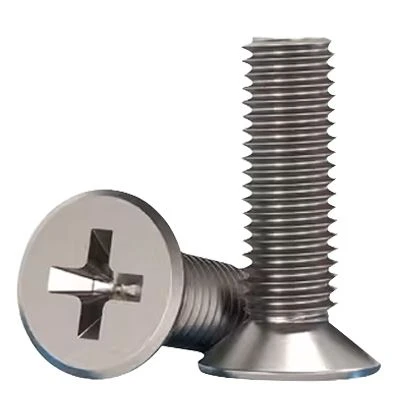

We also offer Countersunk Head Worm Gear Screws. These screws are made from the same high - quality titanium alloy as our nuts and have excellent fatigue resistance.
Another great product in our catalog is the GR5 Flange Head Cap Bolts Titanium. These bolts are perfect for applications where you need high strength and good fatigue life.
Conclusion
In conclusion, the fatigue life of hexagonal titanium alloy nuts is influenced by material properties, manufacturing processes, and operating conditions. While it's not always easy to predict the exact fatigue life, by using high - quality materials, proper manufacturing techniques, and taking into account the operating conditions, we can ensure that our nuts have a long and reliable service life.
If you're looking for hexagonal titanium alloy nuts for your project, we'd love to hear from you. Whether you're in the aerospace, automotive, or any other industry, we can provide you with the right products. Just reach out to us, and we can start a discussion about your requirements and how our products can meet them. Let's work together to find the best solutions for your needs.
References
- Dieter, G. E. (1986). Mechanical Metallurgy. McGraw - Hill.
- ASM Handbook Volume 11: Failure Analysis and Prevention. ASM International.
- Budynas, R. G., & Nisbett, J. K. (2011). Shigley's Mechanical Engineering Design. McGraw - Hill.
