

As a supplier of M12 titanium flange surface nuts, I often receive inquiries about the torque specification for these specialized fasteners. Understanding the appropriate torque for M12 titanium flange surface nuts is crucial for ensuring their proper installation and performance in various applications. In this blog post, I'll delve into the details of torque specifications for M12 titanium flange surface nuts, providing valuable insights for both professionals and enthusiasts.
The Importance of Torque Specification
Torque specification refers to the amount of rotational force that should be applied to a nut or bolt during installation to achieve the desired clamping force. Proper torque is essential for several reasons. Firstly, it ensures that the joint is securely fastened, preventing loosening due to vibration or other external forces. Secondly, it helps distribute the load evenly across the joint, reducing the risk of stress concentration and potential failure. In the case of M12 titanium flange surface nuts, which are often used in critical applications such as aerospace, automotive, and machinery, accurate torque application is even more critical.
Factors Affecting Torque Specification
Several factors influence the torque specification for M12 titanium flange surface nuts. One of the primary factors is the material properties of the titanium alloy used. Titanium is known for its high strength-to-weight ratio, corrosion resistance, and low density. However, different titanium alloys have varying mechanical properties, which can affect the torque required for proper installation. For example, Grade 5 titanium, also known as Ti-6Al-4V, is one of the most commonly used titanium alloys in the production of fasteners. It has excellent strength and ductility, but its torque requirements may differ from those of other titanium alloys.
Another factor to consider is the surface finish of the nut and the mating surface. A smooth surface finish can reduce friction, requiring less torque to achieve the desired clamping force. On the other hand, a rough or dirty surface can increase friction, resulting in higher torque requirements. Additionally, the type of lubrication used can also affect the torque specification. Lubricants can reduce friction and help achieve more consistent torque application.
The design of the flange surface nut itself also plays a role in determining the torque specification. Flange nuts have a wider bearing surface compared to regular nuts, which can distribute the clamping force more evenly. This design feature may require a different torque value to ensure proper seating and tightening.
Determining the Torque Specification
To determine the appropriate torque specification for M12 titanium flange surface nuts, it is recommended to refer to the manufacturer's guidelines or industry standards. Manufacturers typically provide torque values based on extensive testing and research to ensure the safe and reliable use of their products. These values are usually specified in units of Newton-meters (N·m) or foot-pounds (ft·lbs).
In the absence of manufacturer-specific guidelines, general torque tables can be used as a reference. However, it's important to note that these tables provide approximate values and may not be suitable for all applications. Factors such as the specific titanium alloy, surface finish, and lubrication should still be taken into account.
When using a torque table, it's essential to select the appropriate column based on the material of the bolt or stud and the grade of the nut. For M12 titanium flange surface nuts, the torque value will depend on the size of the bolt or stud, the thread pitch, and the desired clamping force. It's also important to follow the proper tightening sequence to ensure even distribution of the clamping force.
Torque Application Methods
There are several methods for applying torque to M12 titanium flange surface nuts. One of the most common methods is using a torque wrench. A torque wrench is a specialized tool that allows the user to apply a specific amount of torque to the nut. There are different types of torque wrenches available, including click-type, beam-type, and digital torque wrenches. Each type has its own advantages and disadvantages, and the choice of torque wrench depends on the specific application and the user's preference.
When using a torque wrench, it's important to follow the manufacturer's instructions for proper use and calibration. Incorrect use or calibration of the torque wrench can result in inaccurate torque application, which can lead to improper installation and potential failure.

Another method for applying torque is using a torque multiplier. A torque multiplier is a device that amplifies the torque applied by the user. It is typically used when a higher torque value is required or when the available space is limited. Torque multipliers can be manual or hydraulic, and they are often used in industrial applications.
In some cases, a combination of torque wrench and torque multiplier may be used to achieve the desired torque value. This approach allows for more precise control of the torque application and ensures that the nut is tightened to the correct specification.
Our Product Range
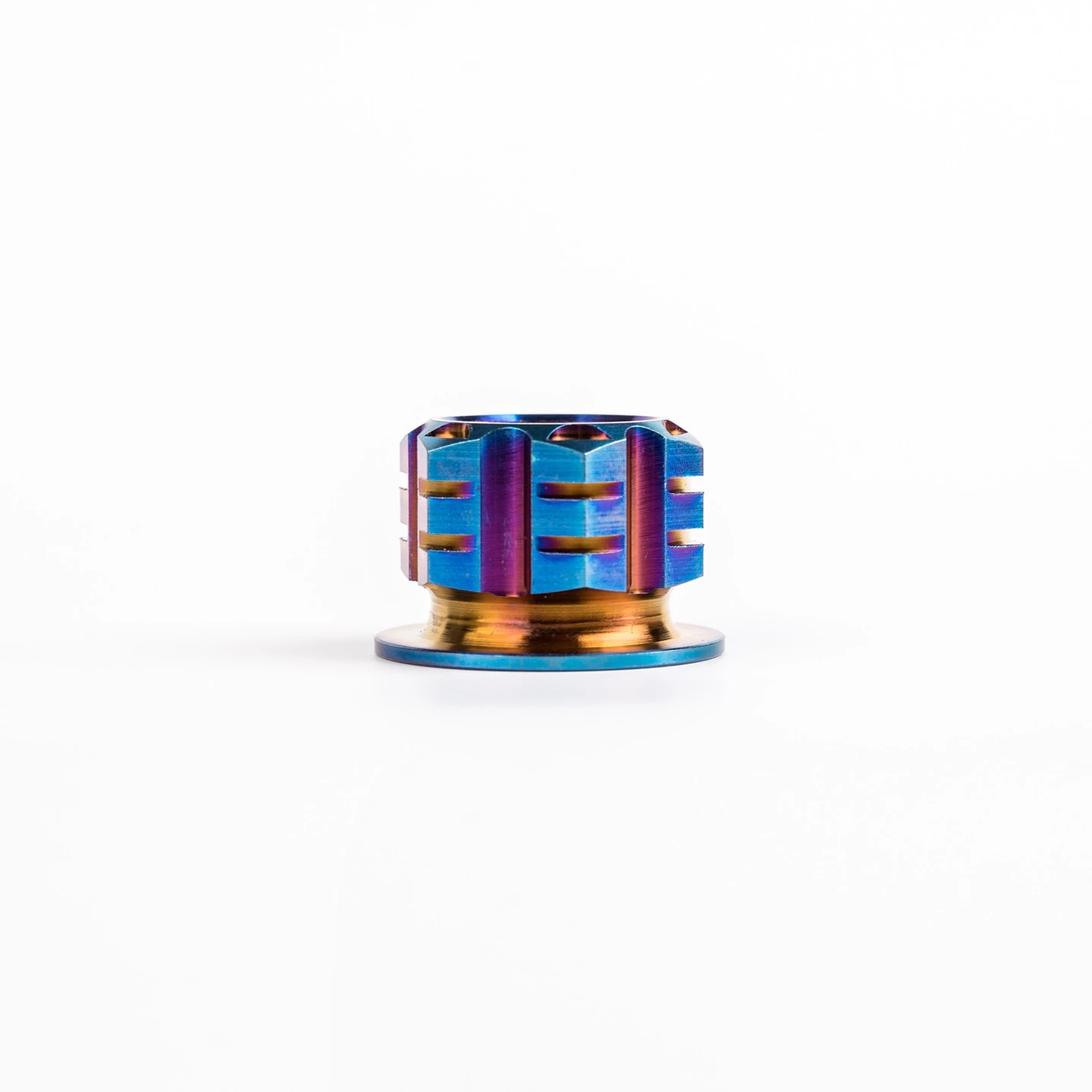
As a leading supplier of M12 titanium flange surface nuts, we offer a wide range of high-quality products to meet the diverse needs of our customers. Our Gr5 Titanium Color Anodized Hexagonal Flange Nuts are made from Grade 5 titanium alloy, which provides excellent strength and corrosion resistance. These nuts are available in various sizes and finishes to suit different applications.
In addition to M12 titanium flange surface nuts, we also offer other titanium products such as Titanium upper pump oil cup and Height Increasing Nut Titanium. Our products are manufactured using advanced production techniques and strict quality control measures to ensure their reliability and performance.
Contact Us for Procurement
If you are in need of M12 titanium flange surface nuts or any other titanium products, we invite you to contact us for procurement. Our team of experts is available to provide you with detailed information about our products, including torque specifications, installation guidelines, and pricing. We are committed to providing our customers with the highest level of service and support, and we look forward to working with you on your next project.
References
- Machinery's Handbook, 31st Edition
- ASTM International Standards for Titanium Fasteners
- Manufacturer's Guidelines for M12 Titanium Flange Surface Nuts
